Free delivery on orders of $70 or more (Quebec/Ontario), $100 (rest of Canada) before taxes and after discounts.


Are you familiar with aloe vera? You’ve probably heard of it, as this plant is found in many cosmetic and beauty products. It is an ingredient in products such as shampoos, moisturizers, healing creams, balms, shower gels, and more.
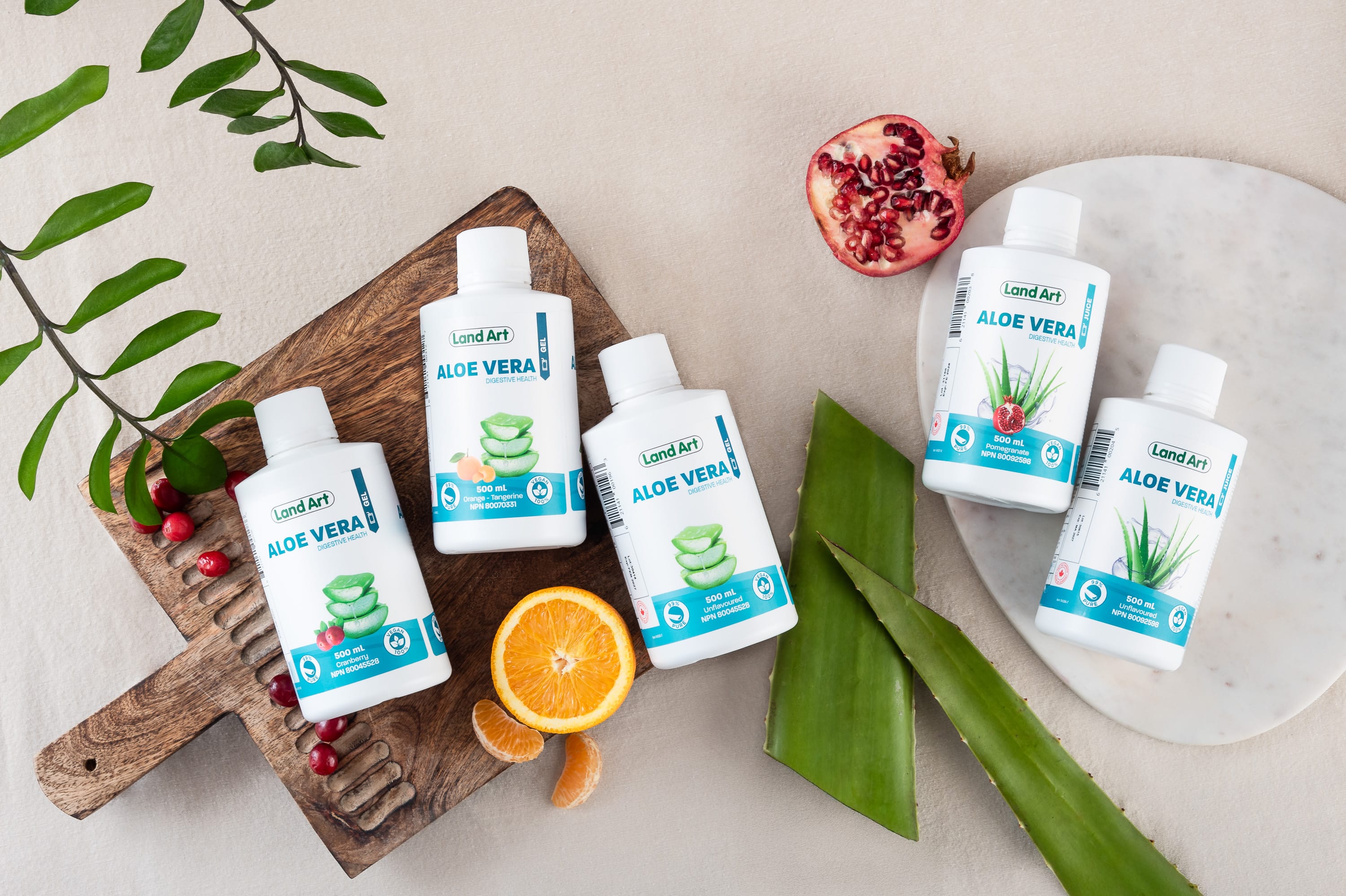
Did you know that aloe vera is also used in food? It can be consumed in various forms and offers real benefits for the body.
In the following lines, you will discover everything there is to know about this highly prized plant.
Origins of aloe vera
Native to hot countries, aloe vera is a succulent plant whose leaves contain a gel with multiple properties. Used for over 5,000 years, it appears in the oldest Egyptian manuscripts discovered to date. One notable example is the famous Ebers Papyrus, which is the oldest medical document recorded to date.
Medicinal properties
This amazing plant is rich in antioxidants, vitamins, and enzymes. It has soothing and moisturizing properties on the body’s mucous membranes.
Aloe vera is a plant that grows in arid environments and stores water in its leaves. Water is also the main component of the leaf, accounting for 98 to 99% of its weight. The dry matter, which therefore represents only 1 to 2%, consists of 60% polysaccharides.
The aloe vera leaf contains more than 75 active compounds (polysaccharides, phenolic compounds, organic acids, etc.) as well as 20 minerals, 20 amino acids, and 12 vitamins. The main secondary metabolites are anthrone and chromone phenolic compounds. Despite extensive research on this plant, it is difficult to identify the specific active ingredients responsible for its properties. Aloe vera has not yet revealed all its secrets.
The benefits of Aloe Vera
High-quality aloe vera juices or gels can be used directly on the skin. Using the gel or drinkable juice is increasingly recommended due to the benefits they offer inside the body, particularly on the digestive system.
Please note that homemade aloe vera leaf extract can only be used topically on the skin, as the leaf contains ingredients that can be harmful. The gel extracted from the inside of the leaves is best used on skin lesions, sunburn, and other external uses.
Juices and gels intended for ingestion must be prepared by responsible companies that ensure their products do not contain any ingredients that are harmful to health. The gel is simply juice that has been thickened by the addition of thickening agents or gums.
Powerful health effects
Among the benefits that the plant brings to our body, we can think of:
Relief from heartburn
A reduction in gastric acidity
Relief from bloating
A powerful anti-inflammatory
Improved digestive functions or related issues such as irritable bowel syndrome
Providing rare and essential nutrients that improve vitality, resistance, and circulation
Natural elimination of toxins.
The unique properties of its polysaccharides make it a very effective antioxidant. Processed without aloin, aloe vera in gel or juice form is not harmful, even over the long term.
The main uses of aloe vera
Topical use
When aloe vera is used topically, i.e., externally (on the skin or mucous membranes), the gel or juice has various properties:
- Stimulation of collagen production
- Treatment of burns, such as sunburn, using fresh gel from the plant
- Several studies have shown that the fresh gel obtained from the central part of the leaf reduces inflammation and accelerates healing.
- Combats skin aging
Internal use
For internal use, aloe vera juice and gel can be consumed neat. Several tablespoons can be taken daily to soothe and calm any irritation or inflammation of the digestive tract, from the stomach to the colon. Thanks to its prebiotic properties, this product is very effective at rebalancing and strengthening the intestinal flora.
The juice or gel can be added to other liquids or smoothie-style preparations if you want to consume it for its antioxidant or prebiotic properties. However, it is best to consume it on its own if you want to maximize its effects on the digestive system.
Warning!
Quality is paramount: look for pure gels and juices from organically grown or certified plants that have undergone cold extraction. This process must be followed throughout the product’s processing, even after bottling. That’s why you should look for an unpasteurized product.
Make sure that the gels are made with xanthan gum or carob to ensure cold processing. Avoid gels made with carrageenan or Irish moss, which require hot solubilization and can cause serious health problems, as revealed by recent studies.
Also avoid drinks that contain little or no aloe vera juice, as these are actually beverages and not real juice. They usually contain a large amount of added sugars, which are harmful to your health.
Check the list of ingredients carefully, as some products are labeled as juices but contain only a small amount of aloe vera juice diluted in other fruit juices. To discover our range of aloe vera products:
click here!